


People no longer search in just one place. They Google, scroll TikTok, explore Instagram hashtags, and read LinkedIn posts before ever clicking your website. Yet, most brands still separate social media and search engine optimization—missing the chance to multiply visibility across both.
Recent research shows that 29% of Gen Z and Millennials now prefer finding answers on social media over Google. If your strategy ignores this shift, you’re leaving serious traffic on the table.
“Content is king, but distribution is queen, and she wears the pants.” – Gary Vaynerchuk
This blog is about making that “distribution” part work harder by connecting your social channels with your SEO engine.
Let’s explore how social media seo turns every like, share, and tag into tangible search growth.
Key Takeaways
- Social and SEO work best together — social creates demand, SEO captures it.
- Use your SEO keywords in captions, hashtags, and Reels so your social posts become searchable.
- Track what social posts drive traffic, branded searches, and links — repeat those.
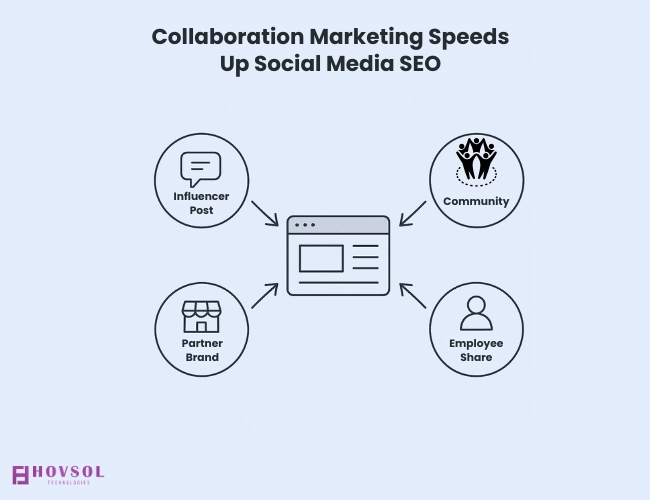
- Collaboration posts (influencers, partners, employees) are the fastest way to amplify social media SEO without more ad spend.
Why Social Media and SEO Should Be Partners, Not Strangers
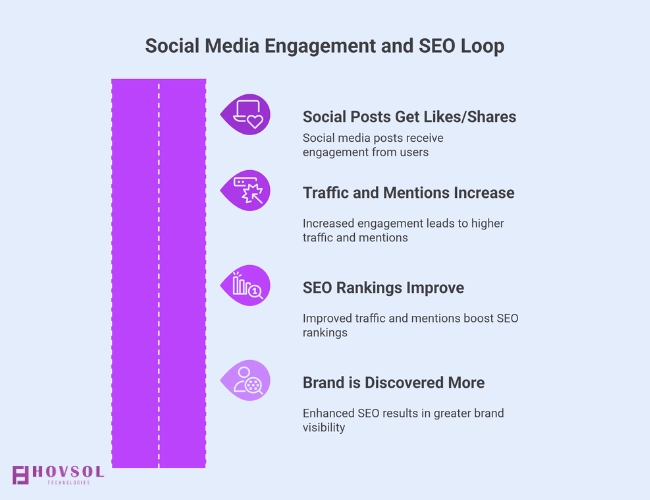
SEO builds your credibility; social media builds your visibility. Together, they form a feedback loop—social discovery fuels search demand, and search credibility drives social trust.
HubSpot notes that when teams align seo and social media marketing, they increase brand searches and backlinks organically. Yet, many marketers still treat them as isolated functions.
Here’s the truth: search and social success depend on collaboration. Keyword insights should guide social topics, and social engagement data should refine SEO content plans.
Team Workflow for SEO & Social Collaboration
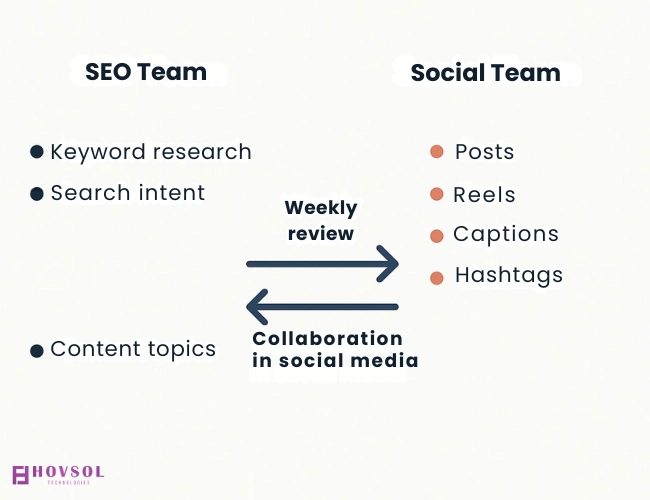
From the top players—HubSpot, Meltwater, and Neil Patel—the winning formula is clear: teamwork. Here’s a proven workflow that unites both functions:
- SEO team identifies trending keywords and search intent.
- Social team creates short‑form content (posts, reels, captions) around those terms.
- Both teams review performance weekly to refine topics and cross‑link assets.
- Collaboration in social media—influencers, partners, and employees—amplify reach.
This is collaboration marketing in practice: structured, measurable, and iterative.
How Social Signals Boost SEO
Each like, comment, and share acts as a “social vote.” While Google doesn’t officially count social signals for SEO, those actions generate secondary ranking benefits—brand mentions, link shares, referral traffic.
Neil Patel’s research shows that posts with over 100 social interactions earn 35% more backlinks within 30 days. The logic is simple: engagement draws attention, and attention earns links.
To make it work, optimise for:
- Profile bios: Add focus keywords and links.
- Captions: Use intent‑based phrasing, e.g., “how to use social media for SEO benefits.”
- Hashtags: Blend branded + seo hashtags + niche topics.
- Video transcripts: Include searchable keywords for accessibility and ranking.
How SEO Powers Social Media Reach
Keyword research isn’t just for blogs—it’s the foundation of discoverable content across social platforms.
By integrating keyword research search engine optimization data into social calendars, you anticipate what audiences will search next. If “eco‑friendly packaging” spikes in Google Trends, your social team can post tutorials, infographics, or “good captions for Instagram” around that theme before competitors catch up.
That’s how social media and search engine optimization feed each other.
Real‑World Proof: Social Media Impact on SEO
According to WebFX, brands investing in social media seo saw up to 50% organic traffic growth within three months.
A lifestyle brand we studied used collaboration marketing with micro‑influencers. They co‑created educational reels using target search terms like “how to use social media for SEO benefits.” The result: organic impressions doubled in six weeks, and branded search queries rose 40%.
Trend Watch: Social Search & AI
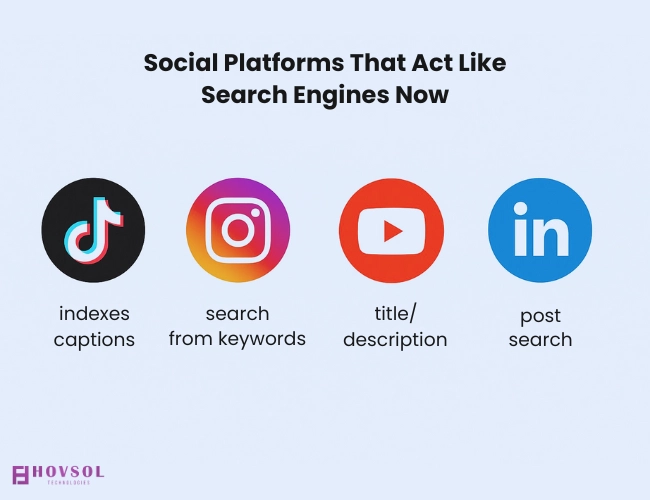
Social platforms are evolving into search engines. TikTok, Instagram, and YouTube now index content by caption text and voice transcripts. Add AI‑driven recommendations, and your visibility depends on how well your social and SEO data align.
The takeaway? Treat every social post as an SEO asset and every SEO keyword as a potential post idea.
Your 5‑Minute Action Plan
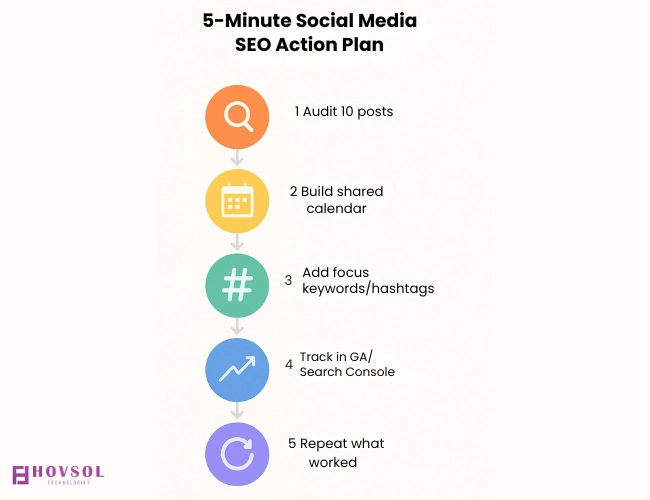
- Audit: Review 10 recent posts—did they target search‑intent topics?
- Collaborate: Build a shared content calendar between social and SEO teams.
- Optimise: Add focus keywords and hashtags like “social media seo” to captions.
- Measure: Track referral traffic, engagement rate, and branded search lift.
- Refine: Double down on posts driving both clicks and comments.
Metrics That Matter
To truly connect social media marketing and seo, monitor a small set of signals that tie social activity to search outcomes.
1. Social referral traffic (Google Analytics)
If your social posts are doing their job, they should send qualified users to the site. Track which platforms, formats, and captions drive the most visits from campaigns that used social media and search engine optimization together.
2. Branded vs. non‑branded keyword growth
When people see you on social, they start Googling your name and your offers. A rise in branded searches is proof that social is creating demand. Non‑branded growth shows your SEO content is still winning.
3. Engagement‑to‑link relationship
Posts that earn saves, comments, and shares are more likely to be linked to or embedded elsewhere. Watch how often high‑engagement social content later appears in referral reports — that’s social signals for seo in action.
4. Platform‑level search visibility
TikTok, Instagram, YouTube and LinkedIn all have search features now. Check whether your target phrases (for example, social media seo or how to use social media for SEO benefits) actually surface your posts inside those platforms.
When SEO and social teams look at the same metrics, attribution becomes clearer — and wins become repeatable.
What Changes When You Integrate Both
When you stop treating SEO and social as separate lanes, growth becomes steadier and easier to explain to stakeholders.
First, you see a broader discovery funnel. Social posts create awareness and spark branded searches; SEO content captures that intent. That’s how teams report a 2–4× lift in organic traffic once campaigns are integrated.
Second, engagement quality goes up. Because your social content is built on real keyword research search engine optimization, people feel it’s relevant, so comments and saves increase — often 3× higher engagement rates than generic posts.
Third, authority strengthens over time. Collaboration marketing and employee/influencer shares generate brand mentions and occasional backlinks. Those signals accumulate and help your pages hold rankings longer.
In essence: social tells the internet you’re worth talking about, and SEO tells search engines you’re worth ranking. Brands that master this loop dominate both feeds and SERPs.
To learn how search optimisation strategies like SEO, AEO, and GEO differ — and when to use each — explore our related guide on SEO vs AEO vs GEO.
FAQs
1. Does social media really help SEO if Google says it’s not a ranking factor?
Yes — just not directly. Social doesn’t give you “rank +3” in Google, but it sends people to your site, earns you mentions, and sometimes backlinks. All three are positive SEO signals. That’s why most guides still tell you to integrate social media and search engine optimization.
2. How do I use social media for SEO benefits without spamming links?
Start with search intent. Post short content that answers the same question your blog answers, then invite people to “read the full guide.” Social first for value, link second for depth. That’s the cleanest way to do how to use social media for SEO benefits.
3. Do social signals (likes, shares, saves) count for rankings?
Not as a direct Google ranking factor — but posts that get engagement usually get shared, embedded, or linked to, and those help rankings. Think of social signals for SEO as amplifiers, not switches.
4. Which platforms are best for social media SEO?
Choose where people actually search: YouTube, Instagram, TikTok, LinkedIn. All four now have search boxes that surface posts based on captions, keywords, and hashtags — perfect for your seo hashtags and intent-based content.
5. What should I measure to prove social → SEO impact?
Three simple things: (1) social referral traffic in GA, (2) rise in branded searches in Search Console, and (3) new backlinks/mentions after a high-performing post. If those move, your social media marketing and SEO are talking to each other.
6. How do collaboration posts help my SEO?
Collaboration in social media = more accounts posting the same URL or idea. That gives you reach, brand searches, and sometimes links from their sites or newsletters. That’s why collaboration marketing belongs inside this playbook.
7. Do links from social count if they’re nofollow?
Most of them are nofollow, but they still bring real humans. Real humans share, bookmark, and sometimes write about you — which does count. So yes, keep sharing.
Your Next Move
Start small, align your SEO keywords with your next week of social posts, track which ones send traffic, and repeat what works. As momentum grows, bring in collaborations and influencer shares to amplify those same pages — that’s where social media SEO really compounds.
Book a consultation with HOVSOL digital marketing experts to build your own integrated social media SEO strategy.

Table of Contents
- Key Takeaways
- Why Social Media and SEO Should Be Partners, Not Strangers
- Team Workflow for SEO & Social Collaboration
- How Social Signals Boost SEO
- How SEO Powers Social Media Reach
- Real‑World Proof: Social Media Impact on SEO
- Trend Watch: Social Search & AI
- Your 5‑Minute Action Plan
- Metrics That Matter
- What Changes When You Integrate Both
- Your Next Move